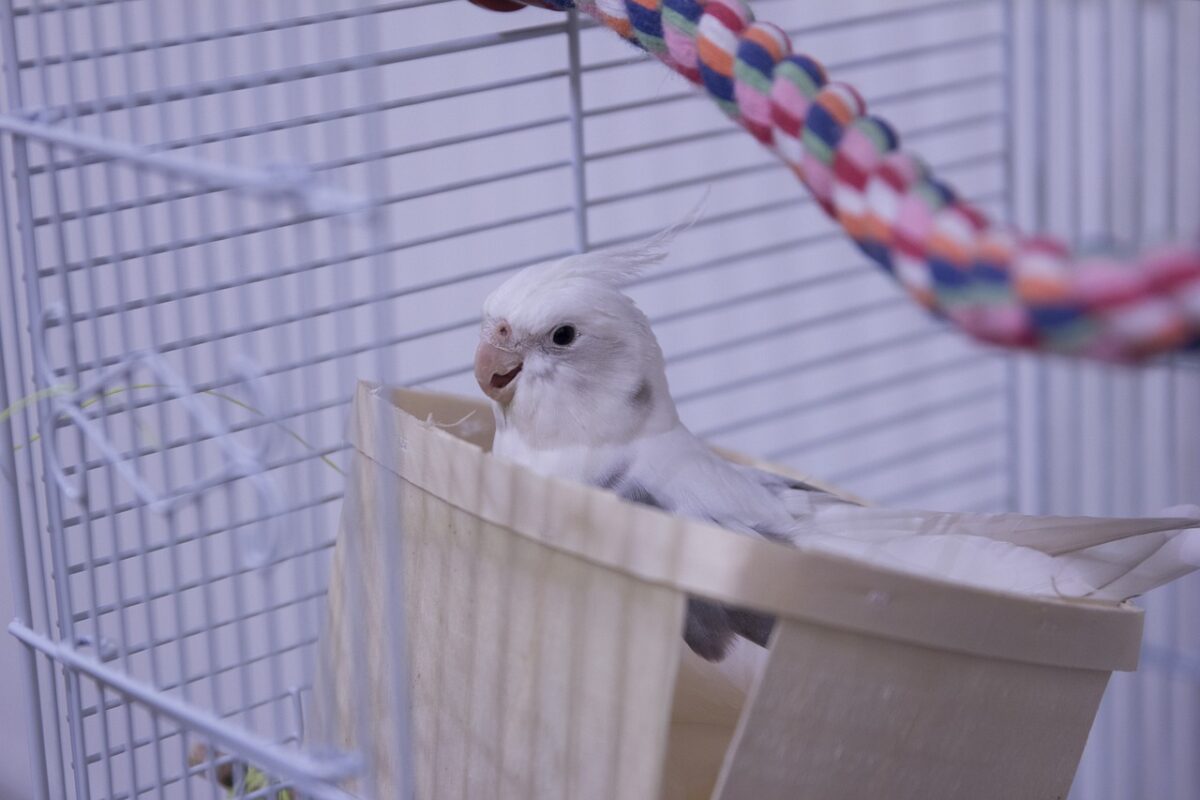
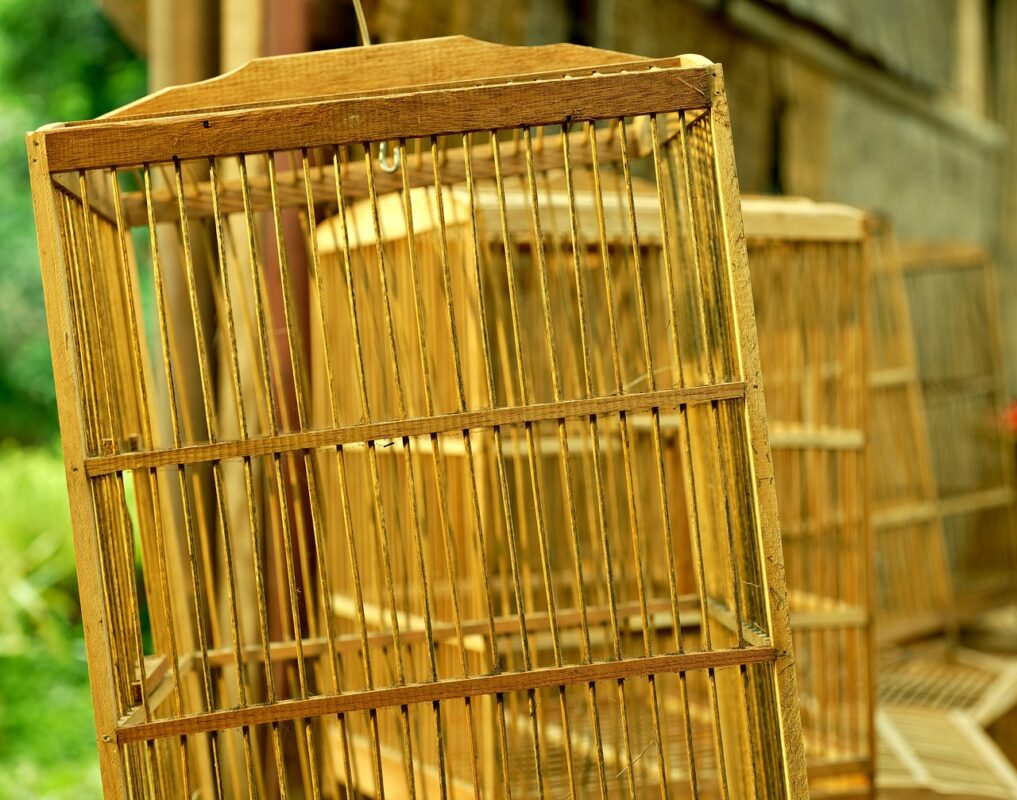
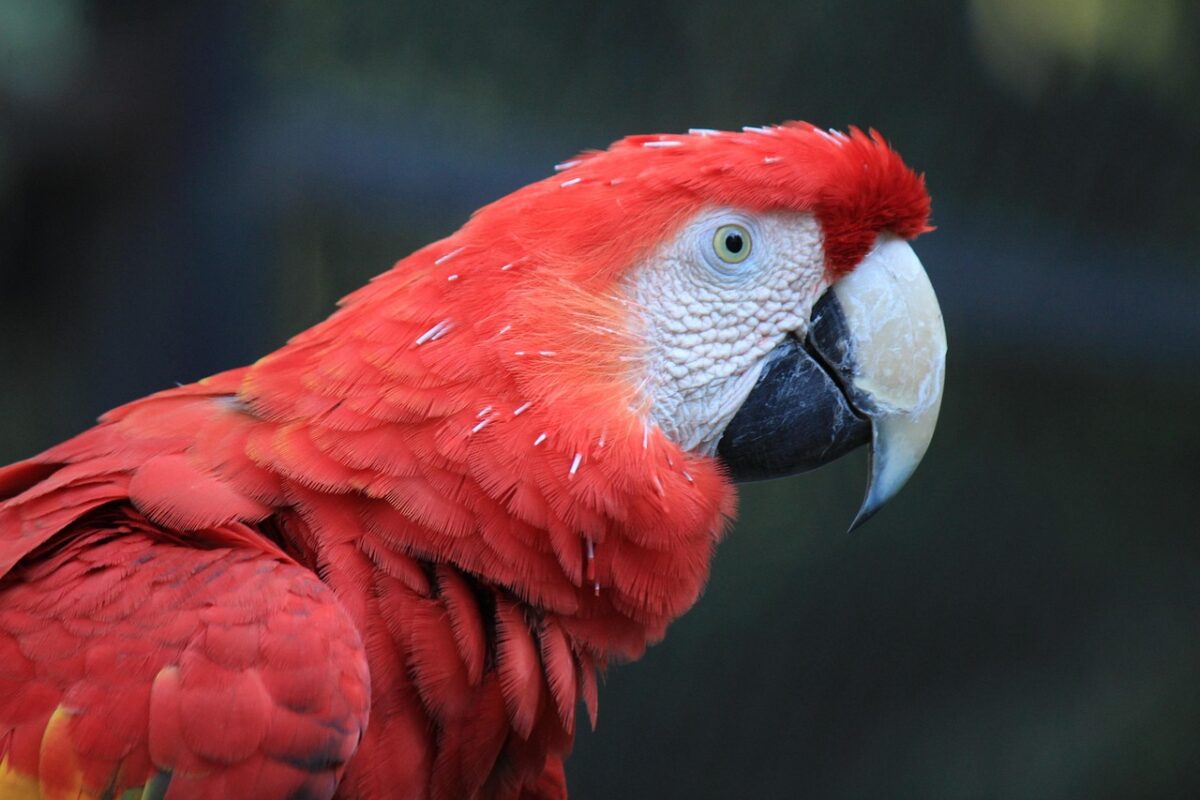
A wild parrot spends somewhere between six and ten hours a day looking for food. Not eating it — looking for it. Climbing, stripping bark, cracking husks, working at things that resist.
A companion parrot with a full bowl has that entire occupation removed in a single act of kindness. The energy does not disappear; it goes somewhere. Screaming, chewing furniture, and in the worst cases feather-destructive behaviour are all what happens when it has nowhere better to go.
What foraging actually means
Foraging, in a cage, means the bird has to work to get at something. That can be as simple as a treat wrapped in paper, or as complex as a puzzle with sliding covers.
The value is in the working, not the reward. A bird that spends forty minutes shredding a woven ball to reach three sunflower seeds has had a genuinely good forty minutes. The seeds are incidental.
Start ridiculously easy
The most common mistake is starting too hard. A bird that has never foraged does not know that the paper contains anything, and after two attempts it will ignore the object permanently — and be harder to convince next time.
Start with the food visible and barely covered. A treat sitting in an open woven cup. A nut half-wrapped in paper with the end sticking out. Once the bird takes it without hesitation for several days, add one layer of difficulty. Then another.
Weeks, not days. A bird that succeeds every time keeps trying.
Build a rotation, not a collection
A cage with fifteen toys permanently in it contains no novelty. A cage with four toys that change every week contains a great deal.
Keep three sets and rotate weekly. Anything that comes out gets cleaned and put away; anything that goes in is either new or has been out of sight for a fortnight. The same toy that was ignored in March becomes interesting again in May.
Match the material to the bird
Shredders — seagrass, corn husk, sola, palm, paper — are for birds that destroy. They are consumable and they are meant to be. Replacing them often is the point, not a failure.
Chewers want hardwood, mineral blocks and thick vegetable-tanned leather. These last far longer and give a beak something to work against.
Puzzle-solvers want mechanisms: sliders, spinners, containers with lids. Greys and cockatoos in particular will exhaust a shredding toy in an afternoon and then want a problem.
Our foraging range is in Foraging and Shredding Toys.
Where you hang it matters
A new object hung in the middle of the cage is a threat. A new object hung beside a favourite perch, where the bird already feels secure, is furniture.
For a very cautious bird, hang it outside the bars for two or three days first. Let the bird decide it is boring, then move it in.
Signs it is working
More time on the cage bars and less on the door. Vocalising that varies rather than one repeated contact call. Debris on the cage floor, which is the best sign of all — destroyed material is a day well spent.
If a bird is plucking, foraging is part of the answer but not the whole of it. Feather-destructive behaviour has medical causes as often as behavioural ones, and it is a conversation for an avian vet before it is a shopping decision.
All articles
Browse the full range in the shop, read the frequently asked questions, or contact us — Birds of a Feather Parrot Pantry, Albuquerque, NM.