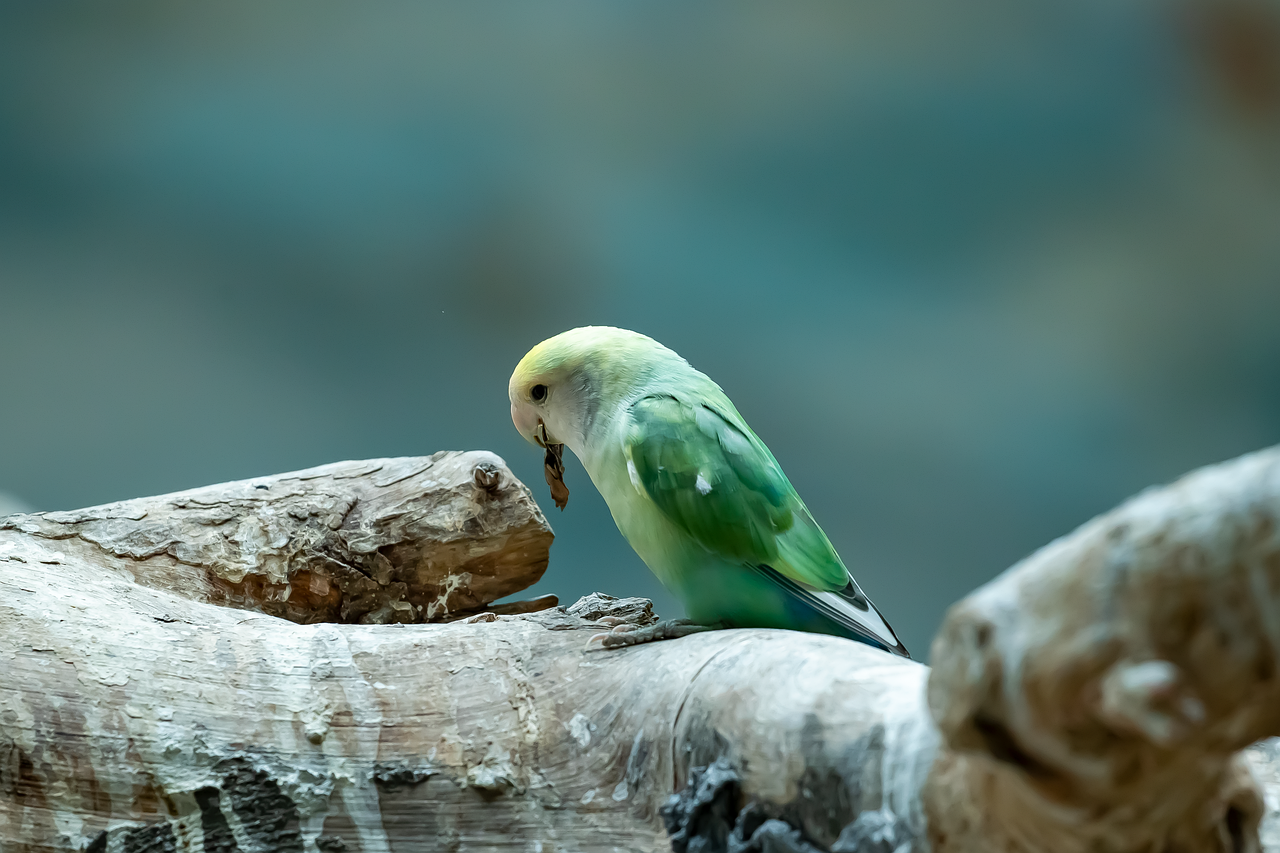
A parrot stands for fourteen hours a day. If every perch in the cage is the same smooth dowel of the same diameter, it stands in the same position on the same points of its feet for all of them.
The result is pressure sores, arthritis in older birds, and a general stiffness that is easy to miss because it develops slowly.
Vary the diameter
The rule of thumb is that a bird’s toes should wrap roughly three quarters of the way around a perch, not meet and not fall well short. But no single diameter is right for a whole day.
Aim for at least three diameters in the cage — one slightly under the ideal, one at it, one over. Natural branches do this automatically because they taper, which is one of their main advantages over dowel.
Vary the texture too
Smooth dowel gives no grip variation at all. Natural branch with bark on it gives grip, something to strip, and a surface that changes as the bird works on it.
Rope perches are comfortable and flexible, and they need watching for fraying. Cement or mineral perches help keep nails in trim but should be one perch in the cage, never the sleeping one — standing on abrasive surface overnight is how you get sore feet, not healthy ones.
Place them by function
The highest perch will be the sleeping perch, because birds sleep high. Make it the most comfortable one — the right diameter, natural material, and not directly above another perch or a food bowl.
Put a flat platform or a wide branch near the food and water, so the bird can stand comfortably while eating.
Keep a route from bottom to top that does not require flight, especially for older birds and heavier species.
What not to do
Do not place a perch directly over a bowl. Do not fill the cage so full of perches that the bird cannot open its wings. Do not use sandpaper perch covers — they abrade the underside of the foot and have no benefit.
And do not put the sleeping perch beside the cage door, where every household movement disturbs it.
Signs of foot trouble
Look at the underside of the feet when you can. Smooth, shiny, reddened patches on the ball of the foot are early pressure sores. Flaking scales, swelling, or a bird persistently favouring one foot are all reasons to change the perches and speak to an avian vet.
A bird that stops using the top of the cage, or that sleeps on the floor, is telling you something about its feet or its balance.
Cleaning and replacement
Perches near food get soiled fastest. Scrub natural wood with hot water and a brush, dry it fully, and replace it when it is chewed thin or stays damp.
A chewed perch is a perch that did its job. Budget for replacing branch perches — they are consumables in the same way that shredding toys are.
Our range is in Perches and Cage Furniture.
All articles
Browse the full range in the shop, read the frequently asked questions, or contact us — Birds of a Feather Parrot Pantry, Albuquerque, NM.