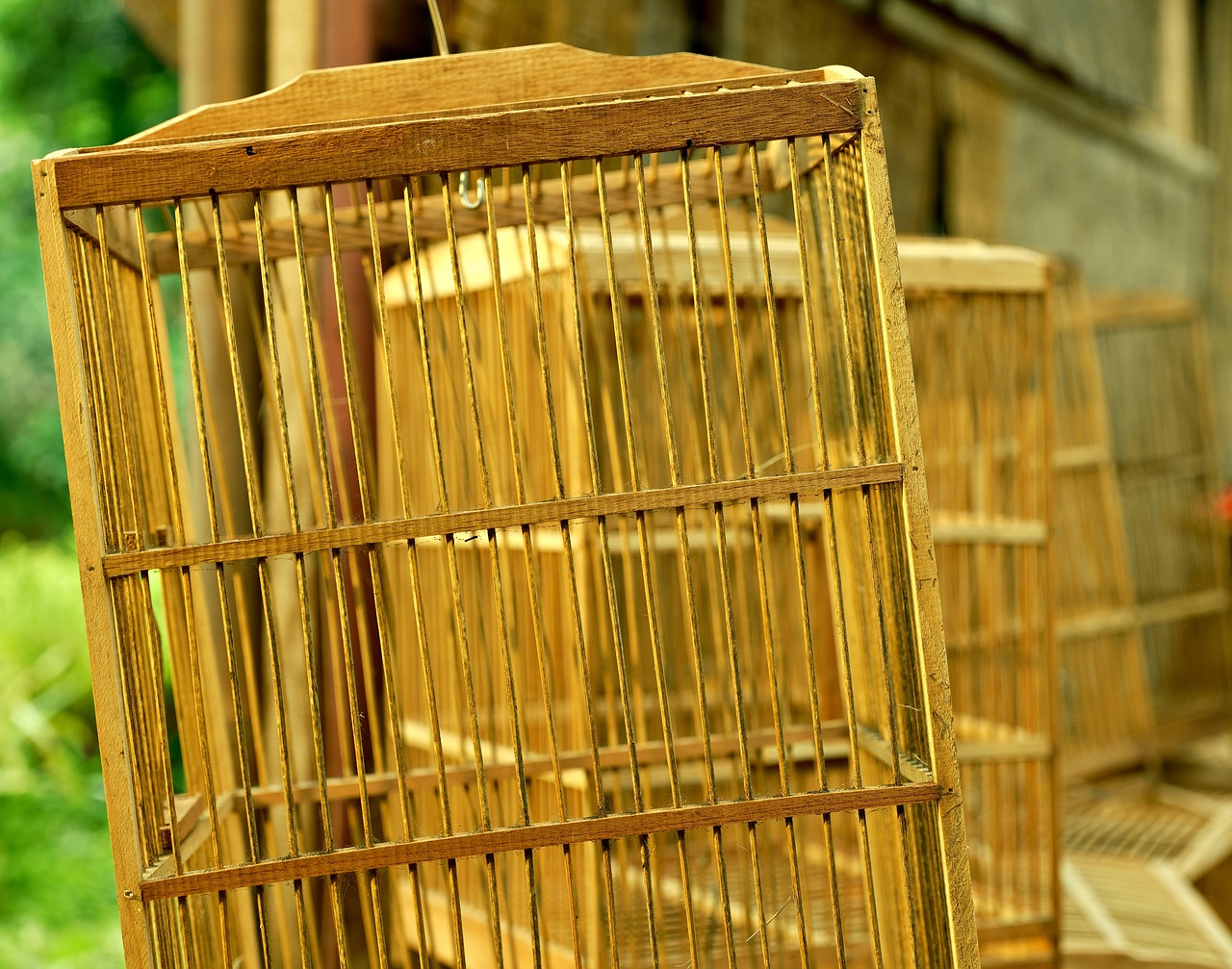
Cage cleaning becomes a chore when it is one enormous job done occasionally. Split into daily, weekly and monthly, it is ten minutes a day and a hour once a month.
Daily: ten minutes
Change the paper on the cage floor. Newspaper or plain paper is ideal — it lets you look at the droppings, which is the single best early-warning system you have for a bird’s health.
Wash both bowls with hot water and dry them. Water bowls grow biofilm fast, and a bowl that feels slippery is already well past due.
Sweep or vacuum around the cage. Clear the obvious debris off perches.
Weekly: half an hour
Scrub the grate and the tray. Wipe the bars, paying attention to anywhere food has been wiped on. Scrub any perch near a food bowl and dry it fully before it goes back.
Rotate the toys — take out what has been in for a week, put in what has been resting. Clean what comes out.
This is also the moment for the safety check: cracked bells, frayed rope, loose hardware, chewed-thin perches.
Monthly: an hour
Everything out. Wash the whole cage, ideally outside or in a shower. Rinse thoroughly — rinsing matters more than the product you used.
Dry completely before the bird goes back. A damp cage grows mould, and mould in a bird’s environment is a genuine respiratory hazard.
Replace anything on the retirement list rather than putting it back for one more month.
Safe cleaning products
Hot water and physical scrubbing does most of the work. Where you want a disinfectant, white vinegar diluted about one to three is effective on most household soil and rinses away completely.
Bird-specific disinfectants such as F10 are worth having for a proper monthly clean. Follow the dilution and the contact time on the label, and rinse.
Products that are genuinely dangerous
Bleach must never be mixed with vinegar or ammonia — the reaction produces chlorine gas, and a bird’s respiratory system is far more vulnerable than yours.
Aerosol cleaners, air fresheners, scented candles and plug-in fragrance should not be used in a room with a bird. Neither should oven cleaner or anything with strong solvent fumes.
The most important one: PTFE and PFOA — non-stick cookware — release fumes when overheated that kill birds quickly and with no warning. That includes non-stick pans, some ovens on self-clean cycles, certain hair dryers and space heaters. This is the leading avoidable cause of sudden death in companion birds, and it is worth checking every appliance in your kitchen.
Ventilation and dust
Cockatiels, greys and cockatoos produce feather dust continuously. An air purifier near the cage helps considerably, and it helps you as much as the bird.
Ventilate the room daily, but never put a cage in a draught or directly under an air-conditioning vent.
Watching the droppings
Plain paper under the cage tells you about colour, consistency and volume every morning without any effort at all. Sudden change in any of the three, particularly if it persists past a day, is worth a call to an avian vet.
Birds conceal illness until they cannot. The cage floor is where they give it away first.
All articles
Browse the full range in the shop, read the frequently asked questions, or contact us — Birds of a Feather Parrot Pantry, Albuquerque, NM.